
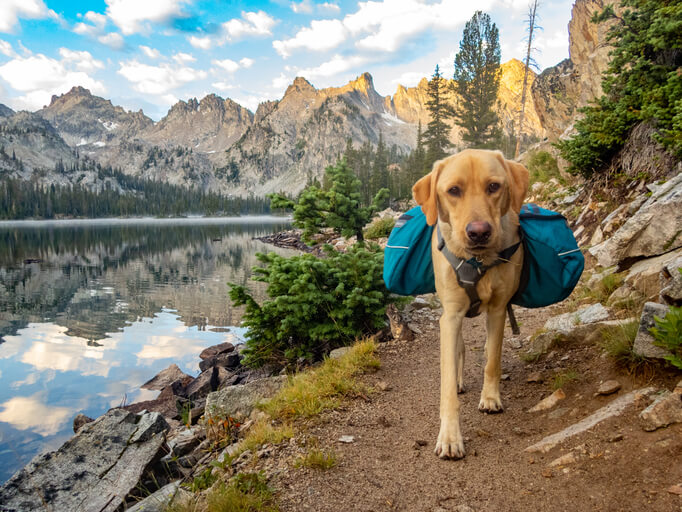
Training & Travel Tips for Hiking with Your Dog
There’s nothing quite like exploring the outdoors with your dog. Whether you’re planning a quick walk through a Metro Park or a day on the trails, a little preparation can make the difference between a stressful outing and a great adventure.
Here are a few training and travel tips to help set you and your dog up for success.
Practice Before You Hit the Trail
The best time to practice trail skills isn’t on the trail.
Even without distractions around, spend a few minutes working on the behaviors you’re likely to need during a hike. Practice stepping off to the side to let others pass, asking for a stay while you tie your shoes, and stand stays while you brush your dog or check for ticks. Work on recalls from the end of your leash in a variety of environments, and consider using a long line to safely practice coming when called before tackling more challenging adventures.
A little practice at home makes it much easier for your dog to succeed when the environment becomes more exciting.
Set Realistic Expectations
Not every dog should hike the same way.
Some dogs are happiest walking beside you on a loose leash for the entire hike, especially larger dogs or those who could unintentionally impact other trail users. Others may do best exploring within the length of the leash, sniffing ahead, or even helping pull you up a hill.
Before you leave home, decide what kind of walk you’re expecting. If your dog enjoys pulling into a harness, a sled dog-style harness allows for much better freedom of movement than many front-attach or pet store-style harnesses. For dogs that are still learning leash skills, this can make the hike more enjoyable for everyone instead of feeling like one long training session.
Choose the Right Trail
Not every trail is the right fit for every dog.
If you’re visiting somewhere new, spend a few minutes researching the terrain, trail length, and how busy the area is likely to be. Friends and family can also be great resources for finding dog-friendly locations.
A nervous or highly excitable dog will often have a much better experience on a quieter trail. Even social dogs may find crowded trails challenging if they regularly encounter dogs that aren’t under control.
Here in Central Ohio, we’re fortunate to have many Metro Parks with dog-friendly trails, although dogs aren’t permitted on every trail. If you’re willing to drive a little farther, you’ll find even more opportunities to explore. Off-leash hiking, however, is much more limited in our area and generally isn’t a realistic option.
Bring Treats (Even If You Don’t Think You’ll Need Them)
Every hike has the potential to become a training session.
You never know when you’ll encounter wildlife, another dog, a group of hikers, or an unexpected distraction. Bringing a handful of high-value treats gives you the opportunity to reward your dog for making great choices and reminds them that paying attention to you is always worthwhile.
You may never open the treat pouch—but when you need it, you’ll be glad it’s there.
Be Considerate of Other Trail Users
One of the best ways to keep trails dog-friendly is to be proactive.
When people approach, move your dog to the side away from them and step off the trail when appropriate. If your dog needs a little extra help, ask for their attention before the distraction becomes overwhelming.
Not everyone enjoys interacting with dogs, and not every dog wants to say hello. Giving others plenty of space helps create a positive experience for everyone sharing the trail.
Watch the Weather
Heat is one of the biggest safety concerns for dogs.
Even with shade and water available, dogs can overheat much more quickly than many people realize. They’re simply not very efficient at cooling themselves. Heat exhaustion and heat stroke can become life-threatening in a short period of time, and emergency veterinary clinics see cases every summer.
Talk with your veterinarian about what is appropriate for your dog’s age, health, coat type, and fitness level. If temperatures are questionable, consider heading out earlier in the morning, choosing a shorter hike, or saving the adventure for another day.
Pack for Success
The longer your adventure, the more prepared you should be.
A quick 20-minute walk at your local Metro Park requires very little equipment. A three-hour hike far from your vehicle is a different story.
For longer outings, consider bringing:
- Water for both you and your dog
- High-value treats
- A backup leash
- Poop bags
- A basic first aid kit (or at least one in your car)
- A towel for muddy paws or unexpected swims
A little preparation can go a long way toward preventing small problems from becoming big ones.
Enjoy the Journey
The goal isn’t just to reach the end of the trail—it’s to enjoy the experience together.
With a little planning, realistic expectations, and some thoughtful training, hiking can become one of your favorite activities to share with your dog. Build the skills before you need them, choose adventures that fit your dog’s abilities, and remember that every outing is another opportunity to strengthen your partnership.
Happy hiking!

Leave a Reply